When the lights go out, the construction site hums to life, or a critical system simply cannot fail, what’s the reliable, foundational technology we turn to? More often than not, it’s a traditional generator. These mechanical marvels are the unsung heroes of our electrified world, diligently converting brute mechanical force into the steady flow of electricity that powers everything from our homes to vast industrial complexes. Understanding their intricate operation, diverse types, and primary applications is key to appreciating their enduring relevance in an increasingly complex energy landscape.
This isn't just about technical specs; it's about making informed decisions for your power needs, whether you're safeguarding your home during a storm, fueling an off-grid adventure, or keeping a business running smoothly. Let's pull back the curtain on these essential machines.
At a Glance: Key Takeaways
- Core Function: Generators transform mechanical energy into electrical energy, primarily through electromagnetic induction.
- Two Main Families: AC (Alternating Current) generators, also known as alternators, and DC (Direct Current) generators.
- AC Dominance: AC generators are most common for grid power, homes, and industry due to efficient long-distance transmission.
- DC Niche: DC generators excel in specific roles like battery charging, electroplating, and powering DC motors.
- Diversity in Design: Both AC and DC types come in numerous configurations based on their rotor design, excitation method, output characteristics, cooling, and intended application.
- Real-World Roles: From portable emergency units to massive power plant engines, generators are indispensable across residential, commercial, industrial, and specialized sectors.
- Smart Choices: Selecting the right generator hinges on your specific power demands, fuel availability, budget, and environmental considerations.
The Spark of Power: How Traditional Generators Work
At their heart, all traditional generators operate on a fundamental principle discovered by Michael Faraday in the 19th century: electromagnetic induction. Simply put, if you move a conductor (like a coil of wire) through a magnetic field, or vary the magnetic field around a conductor, an electric current will be induced in that conductor. This is the magic that transforms mechanical energy into electrical power.
Think of it like this: a prime mover – typically an engine (diesel, gasoline, natural gas) or a turbine (steam, gas, wind, hydro) – provides the mechanical energy by rotating a shaft. This shaft is connected to the generator's rotor, which spins within a stationary housing called the stator. Within this setup, either magnets are spun past coils of wire, or coils carrying current are spun within a magnetic field, constantly disrupting the magnetic flux and generating an electrical voltage.
This elegant conversion process is the bedrock of our modern electrical grid. While newer technologies like power inverters offer a different approach to clean energy, traditional generators remain the workhorses for many applications, delivering robust and reliable power.
AC Generators: The Alternating Current Workhorses
Alternating Current (AC) generators, more commonly known as alternators, are the backbone of most large-scale power generation and distribution systems. Their ability to efficiently transmit electricity over long distances makes them indispensable for powering our homes, industries, and infrastructure.
The core operation of an AC generator involves a rotating magnetic field or a rotating conductor within a stationary magnetic field, continuously changing the direction of the induced current.
Design Variations: Poles Apart
The internal design of an AC generator's rotor is crucial, dictating its optimal operating speed and application.
- Salient Pole Alternator: Imagine a rotor with large, distinct "fingers" or poles projecting outwards, each wrapped with field windings. This design creates a prominent magnetic field.
- Best For: Low-speed applications, typically with many poles (e.g., 6 to 40). You'll often find these in hydroelectric power plants, where massive water turbines rotate slowly but with immense torque.
- Key Feature: Their projecting poles make them physically larger for a given output, but they excel in stability at lower RPMs.
- Non-Salient Pole (Cylindrical Rotor) Alternator: Here, the rotor is smooth and cylindrical, with the field windings embedded in slots along its surface.
- Best For: High-speed applications, typically with fewer poles (2 or 4). These are the powerhouses of thermal and nuclear power plants, coupled directly to high-speed steam or gas turbines.
- Key Feature: Their sleek design minimizes windage losses at high speeds, allowing for efficient operation at thousands of revolutions per minute.
Exciting the Field: Powering the Magnets
For a generator to produce electricity, it needs a magnetic field. This field is created by sending a DC current through the field windings, a process called "excitation."
- Self-Excited Alternator: These generators use a portion of their own output electricity, rectified to DC, to power their field windings. It’s a bit like a perpetual motion machine, but it requires a small amount of residual magnetism in the rotor to kickstart the process.
- Subtypes:
- Shunt-excited: Field winding is connected in parallel with the load.
- Series-excited: Field winding is connected in series with the load.
- Compound-excited: Combines both series and shunt windings for more stable voltage regulation.
- Advantage: Simpler, self-contained, no external power source needed for excitation.
- Separately Excited Alternator: In this setup, the field winding is powered by an independent external DC source (often a smaller DC generator or a rectifier fed from the main AC output).
- Best For: Large alternators where precise control over the output voltage and reactive power is critical.
- Advantage: Offers superior voltage control and stability, as the excitation is independent of the main generator's output fluctuations.
Output Options: Single vs. Three-Phase
The way electricity is delivered from an AC generator also varies based on application.
- Single-phase Alternator: Produces a single alternating voltage waveform.
- Best For: Low-power applications, like typical household portable generators.
- Limitation: Less efficient for large power transmission and doesn't provide the smooth, consistent power needed for heavy industrial motors.
- Three-phase Alternator: Generates three separate AC outputs, each "out of sync" with the others by 120 degrees.
- Best For: Industrial and commercial power generation, as well as the national grid.
- Advantage: Offers higher efficiency, a smoother power output (allowing for smaller, lighter motors for the same power), and is ideal for powering large machinery and motors.
Application-Specific AC Generators
Many AC generators are tailored for specific environments and tasks.
- Automotive Alternator: Found in every modern vehicle, it keeps your battery charged and powers all the car's electrical systems while the engine is running.
- Diesel Generator Alternator: This is the electrical component coupled with a diesel engine to create a complete diesel generator, widely used for backup power in critical facilities.
- Marine Alternator: Designed with robust, corrosion-resistant materials to withstand the harsh saltwater environment of boats and ships.
- Brushless Alternator: These generators use a clever design where the excitation current is induced without physical contact (no carbon brushes).
- Best For: High-reliability applications like aviation, hospitals, and portable power systems where minimizing maintenance and spark hazards is crucial.
Keeping Cool: Thermal Management
Generators produce heat as a byproduct of electrical resistance and magnetic losses. Effective cooling is vital for their longevity and efficiency.
- Air-Cooled Alternator: Uses ambient air or forced airflow (fans) to dissipate heat.
- Best For: Small to medium-sized generators, common in residential and commercial backup units.
- Hydrogen-Cooled Alternator: Large power plants often fill their generator housings with hydrogen gas.
- Advantage: Hydrogen has exceptional thermal conductivity, much better than air, allowing for more efficient cooling and higher power densities.
- Water-Cooled Alternator: Circulates water through internal channels to remove heat.
- Best For: Very large alternators in hydroelectric and thermal power plants, offering highly effective cooling for maximum power output.
DC Generators: The Direct Current Specialists
While AC dominates the grid, Direct Current (DC) generators play a critical role in applications requiring a steady, unidirectional flow of electricity. Think battery charging, electroplating, and powering specialized DC motors.
Like AC generators, DC generators convert mechanical energy into electrical energy using electromagnetic induction. However, they incorporate a "commutator"—a mechanical rectifier—to convert the inherently alternating current generated in the armature windings into a direct current output. The EMF (electromotive force or voltage) generated (E) is directly proportional to a machine constant (k), the magnetic flux (ϕ), and the speed of rotation (N): E = k x ϕ x N.
Exciting the Field: Two Key Approaches
Similar to AC generators, DC generators are classified by how their field windings are energized.
- Separately Excited DC Generator:
- Mechanism: The field winding receives its current from an external DC source, completely independent of the generator's output.
- Features: Offers exceptional control over the magnetic field, allowing for precise output voltage regulation. It doesn't rely on residual magnetism to start.
- Applications: Laboratories requiring precise voltage control, variable voltage output scenarios, and as "exciters" for large alternators.
- Advantages: Stable output regardless of load changes, independent control, consistent operation.
- Disadvantages: Requires an additional external DC power source, adding complexity and cost.
- Self-Excited DC Generator:
- Mechanism: The generator uses a portion of its own generated voltage to energize its field windings. This process usually begins with a small amount of residual magnetism in the field poles, which induces a tiny initial EMF. This EMF then drives a small current through the field winding, strengthening the magnetic field, which in turn increases the EMF, creating a positive feedback loop until the generator reaches its full voltage output (or saturation).
- Advantages: Simpler design, more cost-effective as it eliminates the need for an external DC source, and automatically builds up voltage.
- Disadvantages: Reliance on residual magnetism, and some types can suffer from poor voltage regulation under varying loads.
Types of Self-Excited DC Generators: Tailored Performance
The connection method of the field winding to the armature (the power-generating part) defines the performance characteristics of self-excited DC generators.
- Shunt Wound DC Generator:
- Connection: The field winding is connected in parallel (shunt) with the armature and the load. It has many turns of fine wire, resulting in high resistance and a small field current.
- Features: Provides a relatively constant voltage output under light to moderate loads, as the field current doesn't significantly change with load variations.
- Applications: Ideal for battery charging, providing excitation current for alternators, and small-scale lighting systems where stable voltage is key.
- Series Wound DC Generator:
- Connection: The field winding is connected in series with the armature and the load. It has fewer turns of thick wire, so the field current is equal to the full load current.
- Features: Its voltage output increases with the load current because a higher load current means a stronger magnetic field. However, at very high loads, the voltage can drop due to armature reaction and losses.
- Applications: Suited for electric traction (e.g., old streetcars), welding applications, and situations requiring high starting torque (though less common in modern systems).
- Compound Wound DC Generator:
- Connection: Combines both series and shunt field windings, allowing for a blend of their characteristics.
- Types:
- Cumulative Compound: The series and shunt fields assist each other, meaning their magnetic fluxes add up. This design typically results in a voltage output that can be made to remain nearly constant or even slightly rise with increasing load, as the series winding compensates for the voltage drop caused by increasing load.
- Differential Compound: The series and shunt fields oppose each other, causing the magnetic fluxes to subtract. This leads to a significant drop in voltage as the load increases.
- Applications (Cumulative): Widely used in power supply systems and heavy machinery where a stable voltage output over a varying load is crucial. The cumulative design effectively counteracts the inherent voltage drop of a simple shunt generator as load increases, making it highly versatile.
From Emergency Power to Global Grids: Primary Applications of Traditional Generators
Generators come in countless forms, each optimized for specific applications. Understanding these specific types helps clarify where traditional generator technology truly shines.
Portable Generators: Power On the Go
These are the workhorses of temporary power. Compact and relatively easy to move, portable generators typically run on gasoline or diesel fuel.
- Applications: Residential backup during power outages, powering tools on construction sites, providing electricity for outdoor events, camping, recreational vehicles (RVs), and small commercial establishments.
- Benefits: Convenience, immediate power solution for short-term needs.
- Considerations: Limited run-time, noise levels, fuel storage, and generally less refined power output compared to inverter models.
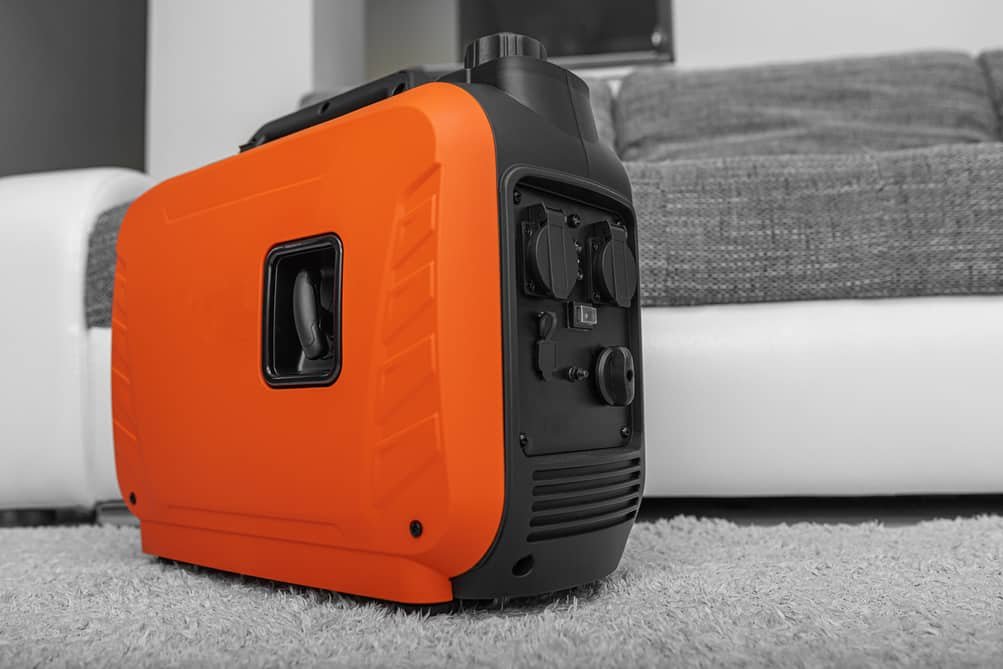
Inverter Generators: Clean Power for Sensitive Devices
A specialized type of portable generator, inverter generators represent a significant leap in power quality and efficiency.
- How They Work: They first convert the engine's AC power to DC, then use an inverter to convert it back to a clean, stable AC power. This "pure sine wave" output is crucial for sensitive electronics.
- Applications: Powering sensitive electronics (laptops, medical devices, modern refrigerators, TVs), recreational use, and car or boat battery charging.
- Benefits: Consistent voltage and frequency, fuel efficiency (engine speed adjusts to load), quieter operation, and high portability.
- Note: While offering superior power quality, a power inverter vs generator comparison shows that a standalone inverter needs a battery bank, whereas an inverter generator is a complete, self-contained power source.
Standby Generators: Your Automatic Power Guardian
Designed for peace of mind, standby generators are permanently installed and automatically kick in when grid power fails.
- How They Work: Connected directly to your home or business's electrical system via an automatic transfer switch (ATS), they constantly monitor utility power. Upon an outage, the ATS switches to generator power within seconds, and then switches back once utility power is restored. They often perform weekly self-tests.
- Fuel: Primarily fueled by natural gas or liquid propane (LP) from a permanent supply.
- Applications: Critical systems in homes (lights, HVAC, well pumps), medical facilities (life support, operating rooms), data centers, commercial businesses, and fire protection systems.
- Benefits: Seamless, automatic power restoration, continuous operation, no need for manual intervention, safer than portable generators during outages.
Industrial Generators: The Behemoths of Backup
When power demands scale up, industrial generators step in. These robust machines are built for continuous operation in harsh environments.
- Power Output: Typically range from 20 kW to 2500 kW, providing voltages from 120 V to 480 V, in single-phase or three-phase configurations.
- Fuel: Often customized to run on natural gas, diesel, gasoline, propane, or even kerosene, depending on availability and cost.
- Applications: Powering entire factories, large commercial buildings, critical infrastructure (airports, water treatment plants), mining operations, and large-scale emergency backup for cities.
- Benefits: Extreme durability, high power output, often customizable to specific operational needs, and designed for prolonged, heavy loads.
Fuel-Specific Generators: Powering the Prime Mover
The type of fuel used to power the engine significantly impacts a generator's characteristics.
- Diesel Generators:
- Fuel: Diesel fuel.
- Benefits: Renowned for durability, fuel efficiency (especially under heavy loads), long lifespan, high starting torque, and robust construction.
- Applications: Hospitals, industries, remote locations, large commercial backup, and construction sites.
- Gasoline Generators:
- Fuel: Gasoline.
- Benefits: Generally smaller, lighter, and more portable than diesel units. Lower upfront cost.
- Applications: Short-term residential backup, recreational use, small tools.
- Considerations: Less fuel-efficient, higher emissions, shorter lifespan, and less suitable for prolonged heavy use compared to diesel.
Renewable & High-Capacity Energy Generators
Beyond internal combustion engines, generators are integral to large-scale power generation from various sources.
- Hydroelectric Generators:
- Mechanism: Convert the kinetic energy of flowing or falling water into electricity using turbines.
- Applications: Found in dams worldwide, providing sustainable, clean, and large-scale renewable energy.
- Benefits: No fuel costs, minimal emissions during operation, provides stable and reliable base-load power to the grid.
- Wind Turbines (Generators):
- Mechanism: Harness wind energy via large blades that spin a rotor, which then drives a generator.
- Applications: Large wind farms, distributed renewable energy solutions.
- Benefits: Reduce carbon footprints, clean energy source.
- Considerations: Output fluctuates with wind availability, often requiring energy storage or backup systems.
- Solar Generators:
- Mechanism: While primarily using photovoltaic panels to convert sunlight into DC electricity, the "solar generator" typically refers to a system combining panels, batteries, and an inverter to provide AC power.
- Applications: Off-grid homes, emergency backup, silent outdoor power.
- Benefits: Silent, zero-emission operation.
- Considerations: Output depends on sunlight availability, battery capacity.
- Steam and Gas Turbine Generators:
- Mechanism: Common in large-scale power plants. Steam turbines expand high-pressure steam (often heated by burning fossil fuels or nuclear fission); gas turbines combust fuel directly to drive a turbine.
- Applications: Major grid power generation, combined cycle power plants.
- Benefits: High efficiency, massive electricity production capacity, critical for national energy supply.
Specialized Generator Types
Some generators leverage unique designs for specific efficiencies.
- Induction Generators:
- Mechanism: These generators are typically induction motors operated above synchronous speed. They don't require external DC excitation for their field (though some setups use capacitors or residual magnetism) and are often used to convert mechanical energy back into electrical energy.
- Applications: Widely used in wind turbines (feeding power back into the grid) and in regenerative braking systems (cranes, hoists, electric locomotives, elevators) where they convert braking energy into usable electricity.
- Benefits: Simplicity, robustness, and reliability in converting intermittent or braking mechanical energy.
- Permanent Magnet Generators:
- Mechanism: Utilize strong permanent magnets to create the magnetic field, eliminating the need for field windings and excitation current.
- Applications: Gaining popularity in small-scale wind turbines and certain hydroelectric systems for increased efficiency.
- Benefits: Higher efficiency due to no excitation losses, simpler construction, and reduced maintenance.
Choosing Your Power Partner: What to Consider
Selecting the right traditional generator isn't a one-size-fits-all decision. It involves carefully balancing your needs against the available options. Understanding these differences is key, especially when weighing your options in a broader power inverter vs generator comparison for your specific energy needs.
Here’s a breakdown of the key criteria:
- Power Requirements (Wattage):
- Calculate Your Needs: List all appliances and tools you intend to power, noting both their starting wattage (surge) and running wattage. Sum these to get a realistic estimate.
- Headroom: Always factor in extra capacity (at least 20-30%) to avoid overloading and extend the generator's life.
- Single-phase vs. Three-phase: Homes typically use single-phase, while heavy industrial machinery requires three-phase power.
- Fuel Type and Availability:
- Gasoline: Common for portable, smaller generators. Easily accessible, but volatile and has a shorter shelf life. Less fuel-efficient.
- Diesel: Preferred for larger, more robust units. More fuel-efficient, durable, and safer to store than gasoline, but diesel engines are typically more expensive upfront.
- Natural Gas/Liquid Propane (LP): Ideal for standby generators connected to utility lines or large tanks. Clean-burning, long shelf life, and often more convenient for continuous operation, but less portable.
- Multi-Fuel/Dual Fuel: Some generators can run on two types of fuel (e.g., gasoline and propane), offering flexibility.
- Portability vs. Permanence:
- Portable: Easy to move, ideal for temporary needs, camping, or job sites.
- Standby/Industrial: Permanent installations, often tied into your electrical system, designed for automatic, long-term operation.
- Noise Level:
- Loudness: Measured in decibels (dB). Standard open-frame generators can be quite noisy (70-80 dB), while inverter generators and enclosed standby units are much quieter (50-65 dB).
- Regulations: Be aware of local noise ordinances, especially for residential use.
- Runtime and Efficiency:
- Fuel Tank Size: Dictates how long a generator can run on a single tank.
- Fuel Efficiency: Diesel and inverter generators are generally more fuel-efficient, offering longer runtimes per gallon.
- Power Quality (THD - Total Harmonic Distortion):
- Sensitive Electronics: If you plan to power laptops, medical equipment, or modern appliances, look for generators with low THD (typically less than 5%), like inverter generators. Standard generators might produce "dirty power" that can damage sensitive devices. This is particularly relevant when deciding between a generator and, say, a more portable or specialized solution, a decision often explored in detail within a thorough power inverter vs generator comparison guide.
- Budget and Maintenance:
- Upfront Cost: Varies significantly by type, size, and features.
- Operating Costs: Fuel consumption, routine maintenance (oil changes, filter replacements), and potential repairs. Diesel generators, while having a higher initial cost, often have lower long-term operating costs.
- Environmental Impact:
- Emissions: Consider emissions regulations in your area. Natural gas/LP generators generally produce fewer emissions than gasoline or diesel.
- Renewable Integration: For long-term sustainability, consider generators that can integrate with solar or wind power systems.
Common Questions and Misconceptions
Let's clear up some frequent points of confusion about traditional generators.
"What's the biggest difference between AC and DC generators?"
The fundamental difference lies in the type of current they produce: Alternating Current (AC) versus Direct Current (DC). AC generators inherently produce current that periodically reverses direction, which is ideal for grid distribution. DC generators, however, use a commutator to deliver current that flows in a single direction, perfect for applications like battery charging or electroplating.
"Why are some generators so loud?"
The primary sources of noise are the engine (combustion and mechanical parts) and the exhaust system. Generators that are air-cooled, lack extensive soundproofing, or run at a constant, high RPM (like many conventional portable units) tend to be louder. Inverter generators, with their variable engine speed and often enclosed designs, are significantly quieter.
"Can I power my whole house with a portable generator?"
It depends on the size of your house and its power needs. Most portable generators (3,000-10,000 watts) can power essential appliances (refrigerator, some lights, a few electronics) but not typically an entire home's HVAC, water heater, and multiple large appliances simultaneously. For whole-house backup, a permanently installed standby generator is usually required.
"Are traditional generators bad for sensitive electronics?"
Older or less sophisticated traditional generators can produce "dirty power" with high Total Harmonic Distortion (THD). This uneven power waveform can potentially harm sensitive electronics. Inverter generators, however, convert power into a clean sine wave (low THD) and are perfectly safe for all electronics. When in doubt, check the generator's THD rating.
"What's the difference between a generator and an alternator?"
In common usage, "alternator" refers specifically to an AC generator, particularly the one in a car. "Generator" is the broader term encompassing both AC and DC machines. So, all alternators are generators, but not all generators are alternators (e.g., a DC generator is not an alternator).
Powering Forward: Your Next Steps
Traditional generators, in their many forms, continue to be indispensable tools for ensuring reliable power. From the critical life-saving systems in hospitals to the simple convenience of powering your tools in a remote location, their operation, diverse types, and primary applications are woven into the fabric of modern life.
Your journey into choosing the right generator doesn't end here; it begins with an assessment of your unique power landscape. Consider your specific needs, the environment it will operate in, and your budget. Whether it's the quiet hum of an inverter unit keeping your devices safe, or the robust roar of an industrial diesel preparing for a blackout, an informed decision ensures you have the power you need, when you need it most. Ultimately, your choice boils down to balancing power, efficiency, and application, which often comes up in any power inverter vs generator comparison you might conduct. If you're unsure, consult with a qualified electrician or generator specialist to size and install the perfect power partner for you.