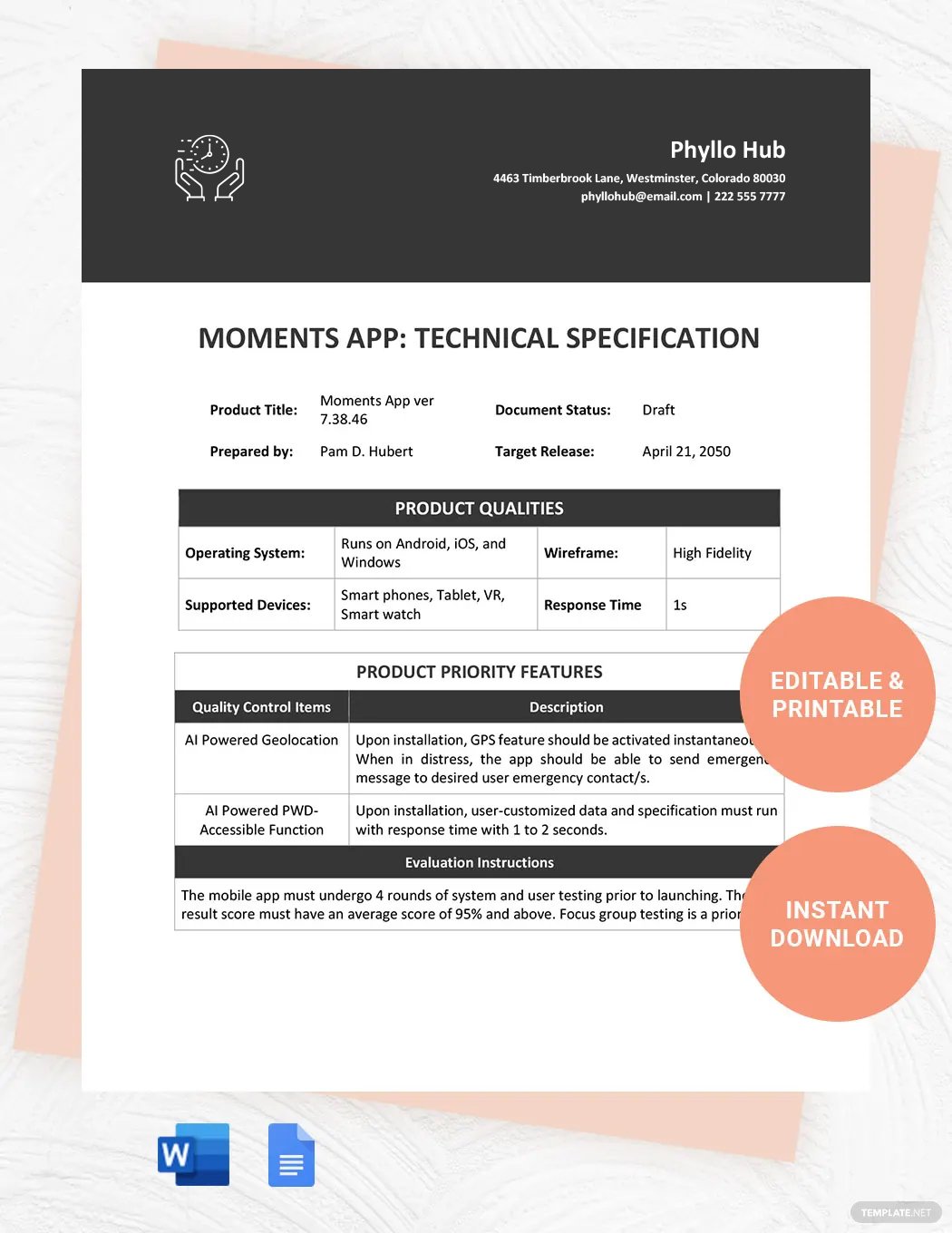
In the complex symphony of project development, where innovation meets execution, the subtle hum of a well-defined technical specification or a robust safety protocol might not be the loudest instrument, but it's absolutely the most critical. Without clear Key Technical Specifications and Safety Considerations, even the most brilliant ideas can falter, leading to costly delays, unmet expectations, and, worst of all, potential hazards. This isn't just about paperwork; it's about building a bulletproof foundation for products, systems, and services that are reliable, performant, and, above all, safe for everyone involved.
Think of it this way: you wouldn't build a skyscraper without meticulously detailed blueprints and rigorous safety checks, right? The same principle applies whether you're developing cutting-edge software, manufacturing complex machinery, or orchestrating a large-scale construction project. These specifications and safety considerations are your blueprints, your user manual for success, and your safeguard against unforeseen dangers.
At a Glance: Your Project's Blueprint for Success
- Specs Aren't Optional, They're Essential: Clear technical specifications drive clarity, quality, efficiency, and seamless collaboration across your team.
- Plan Before You Write: Align your specifications with project goals, target audience, existing constraints, budget, and a solid collaboration plan.
- Seven Pillars of a Strong Spec: Ensure your technical documents cover purpose, functional and design requirements, technical standards, testing, delivery, and ongoing support.
- Safety Demands Understanding: Implementing safety requirements goes beyond writing; it requires verifying clear interpretation by end-users and continuous feedback.
- Reliability and SIL are Your North Stars: Factor in Reliability Engineering to prevent failures and Safety Integrity Levels (SIL) to measure risk reduction.
- Embrace Iteration: Develop and refine requirements through continuous stakeholder feedback, treating every challenge as an opportunity for improvement.
- Tools Make the Difference: Leverage systems like CCMS (for content consistency) and Requirements Management tools (for traceability and version control) to stay organized.
- Test, Test, Test: Regression testing is non-negotiable to ensure new changes don't break existing functionality and that resolved issues stay resolved.
Why Specs and Safety Aren't Just Bureaucracy (They're Your Lifeline)
Many project teams view creating detailed specifications or formal safety protocols as burdensome overhead. But here's the truth: these aren't merely administrative tasks. They are strategic tools that define success and mitigate failure.
Well-written technical specifications are the bedrock of clarity. They ensure every team member, from the initial designer to the end-user, understands precisely what needs to be built and how it should perform. This clarity translates directly into quality—products that reliably meet user satisfaction, are maintainable, and scalable. Imagine trying to develop a complex software system without knowing exactly what features need to be included or how they should interact; it's a recipe for chaos. Clear specs streamline communication, reduce rework, and ultimately increase efficiency, ensuring everyone is pulling in the same direction towards a shared, well-understood goal.
Beyond functionality, safety considerations are about protecting lives, minimizing risks, and upholding ethical responsibilities. Ignoring them can lead to devastating consequences, from operational downtime to catastrophic accidents and legal liabilities. Integrating safety from the very beginning isn't an afterthought; it's a fundamental aspect of responsible and successful project management.
Laying the Groundwork: Before You Even Write a Line
Before you dive into drafting a single requirement, pause. The effectiveness of your technical specifications hinges on a solid pre-writing strategy. Consider these five crucial factors:
- Project Goals: What Are We Truly Trying to Achieve?
Your specifications must be inextricably linked to the overall project vision and the needs of your stakeholders. Are you aiming for market disruption, incremental improvement, or regulatory compliance? Every feature and function you outline should serve these higher-level objectives. Without this alignment, you risk developing a product that, while technically sound, fails to meet its strategic purpose. - Audience: Who Needs to Understand This?
A specification written for a software developer will differ significantly from one intended for a project manager, a manufacturing team, or an end-user. Tailor your language, level of detail, and even the format to your readers. Engineers might appreciate intricate technical diagrams and precise jargon, while stakeholders might need more high-level summaries and impact analyses. - Constraints: What Are Our Boundaries?
Every project operates within limitations. These could be hardware or software limitations, compatibility issues with existing systems, or stringent regulatory requirements. Acknowledge these constraints upfront, as they directly impact feasibility, design choices, and your project timeline. Ignoring them will only lead to expensive late-stage changes or impossible demands. - Timeline and Budget: How Much Do We Have and When Do We Need It?
Realistic expectations are key. Your specifications must be achievable within the allocated timeline and budget. Overly ambitious requirements without corresponding resources are a common pitfall. Ensure your resource allocation, from personnel to specialized equipment, is appropriate for the complexity and scope of your specifications. - Collaboration: Who's on Board and How Will We Work Together?
Project success is rarely a solo endeavor. Define how multiple stakeholders—developers, designers, testers, legal teams, clients—will collaborate. Assign clear responsibilities, establish communication channels, and outline a robust process for managing feedback and changes. This upfront planning prevents bottlenecks and ensures everyone feels heard and valued.
The Blueprint: Essential Components of a Robust Technical Specification
Once you've set the stage, it's time to construct the detailed blueprint. Effective technical specifications typically comprise seven key components:
- Purpose and Scope: The "Why" and "What"
This section provides a high-level overview of the project's goals, objectives, and intended outcomes. It clearly defines the boundaries of the system or product—what it will and will not do. Think of it as the mission statement for your technical work, giving context to everything that follows. - Functional Requirements: The "What It Does"
Here, you detail the specific features and functionalities the product or service must include. This covers everything from hardware specifications (e.g., processor speed, memory capacity) and software functionalities (e.g., user login, data encryption) to critical performance benchmarks (e.g., response times, uptime guarantees). These are the measurable actions the system performs. - Design Requirements: The "How It Looks and Feels"
While functional requirements define what the system does, design requirements dictate how it appears and interacts with users. This includes visual elements, layout, navigation principles, user interface guidelines, and user experience (UX) considerations. For instance, you might specify a consistent color palette, specific font types, or accessibility standards. - Technical Standards: The "Rules of the Game"
This component specifies any industry standards, protocols, or regulatory requirements that your project must adhere to. This could involve international communication protocols, data security standards (like ISO 27001), environmental regulations, or specific coding guidelines. Adherence to these standards is often non-negotiable for interoperability, compliance, and safety. - Testing Requirements: The "How We Know It Works"
A product is only as good as its validation. This section outlines your test plans, specific test cases, and the acceptance criteria that must be met before the product is deemed ready. What constitutes a successful test? What are the key performance indicators (KPIs) for quality assurance? This forethought ensures that testing isn't an afterthought but an integral part of development. - Delivery Requirements: The "Getting It There"
Once the product is built and tested, how does it reach its users? This covers crucial logistical and operational details: firm delivery dates, detailed installation instructions, specific deployment environments, and any necessary user training requirements. Clearly defining these ensures a smooth transition from development to operational use. - Support and Maintenance Requirements: The "Keeping It Running"
Projects don't end at delivery. This component addresses the long-term viability of the product or system. It includes information on warranties, service level agreements (SLAs), maintenance schedules, technical support channels, and documentation for ongoing upkeep. Thinking about support upfront ensures the product remains valuable and functional over its lifespan.
Beyond the Page: Implementing Technical Safety Requirements in the Real World
Writing comprehensive specifications is one thing; ensuring they are accurately understood and effectively implemented, especially when it comes to safety, is another. Effective implementation of technical safety requirements goes far beyond just good writing; it requires a proactive approach to verification and feedback.
You might have written the perfect safety instruction, but if the end-user, perhaps operating in a second language or under pressure, misinterprets it due to complex sentence structure or cultural nuances, the safety advantage is lost. Prioritize accuracy and completeness over "pride of authorship." Proactively gather feedback from the people who will actually use the system or follow the procedures. This iterative feedback loop is crucial for addressing potential misinterpretations and refining requirements until they are crystal clear.
Navigating the Safety Minefield: Key Constraints and Controls
When building safety into your systems, you're operating within a framework of critical constraints:
- Reliability Engineering: Predicting and Preventing Failure
This discipline focuses on the ability of a system or component to function properly over its lifetime and the associated costs of failure. Reliability engineering deals with predicting, preventing, and managing failure risks. It's not just about preventing catastrophic failures, but also understanding the probability of smaller failures and their impact on overall system performance and safety. Your requirements must align with established reliability targets. - Safety Integrity Level (SIL): Quantifying Risk Reduction
SIL is a vital measurement of performance that reflects the risk reduction provided by a safety function. It's often used in industrial processes and defines the rigor of safety measures. A higher SIL indicates a lower likelihood of safety hazards from system failure, demanding stricter adherence to hardware and systematic safety integrity categories. Every technical safety requirement must support and fit within these predefined reliability and SIL constraints, ensuring that critical functions meet the necessary safety standards. This often necessitates a deeper dive into system architecture, for instance, understanding how a power inverter vs generator guide might detail safety shut-offs for overcurrent protection.
From Concept to Cautious Code: The Iterative Dance of Safety Development
Developing robust safety requirements isn't a one-and-done task; it's a dynamic, continuous process of feedback, refinement, and vigilance.
- Continuous Feedback and Refinement: Requirements are rarely perfect on the first draft. They evolve through continuous feedback and refinement cycles with diverse stakeholders—systems engineers, hardware teams, software developers, and safety experts. This back-and-forth, though time-consuming, is invaluable. It confirms implementability, identifies interdependencies, and drives the judicious allocation of requirements within the overall system architecture. Initially, this allocation might be based on higher-level abstract considerations, then refined to define critical time intervals (like reaction times for safety mechanisms), and finally addressing the specific safety mechanisms themselves.
- Identifying New Hazards and Resolving Gaps: When you're building a system without prior work, such as an OEM providing initial "parent" requirements to a supplier, the process becomes even more critical. Authors must frequently query, probe for potential edge cases, identify new hazards that weren't initially considered, and resolve any gaps discovered during development. System complexity directly impacts the number and detail of requirements needed. Think about modern vehicle mirror systems with advanced features like blind-spot monitoring compared to older, simpler designs; the functional safety requirements expand exponentially.
- Problem Reporting and Change Control: Iterations are vital for problem-solving. They help identify and avoid unintended functionality—such as erratic braking in an autonomous vehicle or accidental airbag deployment. When these issues arise, documenting them through a company's problem reporting or change control process (often managed by a Change Control Board, or CCB) is paramount. This robust documentation creates a clear traceability path, allowing you to trace issues to their root cause and implement effective solutions.
- The Power of Regression Testing: After any modification or fix, regression testing is essential. This isn't just about ensuring the current problem is solved; it's about verifying that the fix hasn't introduced new bugs or negatively impacted existing critical functionalities. When defining test boundaries, you must retest all related functions and systems affected by a modification. For example, if you change a sensor’s software module, you must retest all other software modules that utilize data from that sensor. It’s a painstaking but non-negotiable step to maintain system integrity and safety.
Tools of the Trade: Streamlining Your Specs and Safety
Managing the sheer volume and complexity of technical specifications and safety requirements can be daunting without the right tools.
- Single Source of Truth (SSoT) with CCMS: Using a Component Content Management System (CCMS) like Heretto can be transformative. A CCMS ensures content accuracy, relevance, and consistency by establishing a Single Source of Truth. This means all changes are made in one place, propagating automatically across all relevant documents. This facilitates workflows, enables significant content reuse (imagine not having to re-write common safety warnings for every product variant!), and supports multiple publishing outputs, ensuring your critical information is always up-to-date and accessible.
- Robust Tracking with Requirements Management Tools: For complex systems, dedicated requirements management tools like Jama Connect® are invaluable. These tools allow you to write requirements, often combining natural language with specific code snippets and graphical elements. A core feature is the assignment of unique ID numbers to each requirement, facilitating robust tracing and hierarchical relationships. When a "parent" requirement changes, all linked "child" requirements are automatically flagged as "suspect." This critical alert ensures that every related component is re-evaluated and re-tested to verify its continued validity and alignment with the updated parent. This prevents cascading failures and ensures comprehensive system integrity.
Common Pitfalls and How to Dodge Them
Even with the best intentions, projects can stumble when it comes to specifications and safety. Here are some common traps and how to avoid them:
- Vague Language: "The system should be fast" is useless. "The system must process 100 transactions per second with a 99% success rate and a response time under 200ms" is actionable. Be specific, measurable, achievable, relevant, and time-bound (SMART).
- Scope Creep: Adding features continuously without adjusting timelines or resources. Stick to your defined scope, and implement a rigorous change control process for any additions.
- Ignoring Stakeholder Feedback: Dismissing concerns from developers, testers, or end-users. These individuals often have invaluable insights into feasibility and usability. Proactively solicit and genuinely consider their input.
- Delaying Safety Integration: Treating safety as a "check-box" item at the end of the project. Integrate safety from conceptualization through design, development, testing, and deployment.
- Poor Documentation (or None at All): Relying on verbal agreements or fragmented notes. Every decision, change, and requirement needs to be formally documented and easily traceable, especially for critical safety components.
- Underestimating Training Needs: Assuming users will instinctively understand safety protocols or complex system operations. Provide thorough, accessible training and documentation.
- Neglecting Regression Testing: Believing that once a bug is fixed, it stays fixed. Always retest affected areas to prevent the reintroduction of old problems or the creation of new ones.
Your Action Plan: Building a Foundation for Unwavering Project Success
Mastering Key Technical Specifications and Safety Considerations isn't a passive activity; it's an active commitment to excellence. For your next project, embrace these steps:
- Start Strategic: Before writing, convene your core team to define project goals, audience, constraints, budget, and a clear collaboration framework.
- Draft with Purpose: Systematically outline your technical specifications, ensuring all seven core components—purpose, functional, design, standards, testing, delivery, and support—are thoroughly addressed.
- Prioritize Safety from Day One: Integrate safety requirements into every phase, considering Reliability Engineering and appropriate Safety Integrity Levels (SIL) from the outset.
- Embrace Iteration and Feedback: Actively seek feedback from all stakeholders. Encourage questions, clarify ambiguities, and be prepared to refine your requirements repeatedly. Remember, perfect is the enemy of good, but clarity is the friend of safety.
- Utilize the Right Tools: Invest in and properly implement a CCMS for content consistency and a requirements management tool for traceability and change control. These aren't just software; they're investments in project efficiency and risk reduction.
- Implement Rigorous Testing: Develop comprehensive test plans, including explicit regression testing protocols, to validate functionality and, critically, ensure safety throughout the development lifecycle and beyond.
- Foster a Culture of Safety: Encourage every team member to be a proactive participant in identifying potential hazards and suggesting improvements. Make safety everyone's responsibility, not just a department's.
By committing to these principles, you won't just build successful products; you'll build trust, minimize risk, and create solutions that truly make a difference. The blueprint is in your hands—now, build with confidence and care.